Commune-Level Government:
Functions and Duties under the 2025 Reform
On 16 June 2025 the 15th National Assembly passed the Law on Organization of Local Government No. 72/2025/QH15. From 1 July 2025 the whole country has operated a two-tier model of local government. The district level has ceased to exist, and the commune level has become the grass-roots administration that deals directly with citizens. This article sets out what the commune level now is, what it decides, what it administers and how it is organised.
1. A historic restructuring
For decades local government in Việt Nam was organised in three tiers: province, district and commune. Law No. 72/2025/QH15 replaced that arrangement with two tiers only. The district level ceased to operate on 1 July 2025 and the tasks it had carried out were redistributed between the two remaining tiers: roughly 86 per cent passed down to the commune level and roughly 14 per cent passed up to the provincial level.
The restructuring was accompanied by a nationwide merger of commune-level units. Each commune, ward or special zone is therefore larger in area and population than before, and it now carries a far wider range of responsibilities than the old commune administration ever did.
2. What the commune level is
Administrative units are now organised in two tiers. The provincial level comprises provinces and centrally-run cities. The commune level comprises the commune in rural areas, the ward in urban areas and the special zone on islands.
Each commune-level unit has two bodies. The People’s Council is the elected body of local State power: it decides and it supervises. The People’s Committee is the executive body: it administers, organises implementation and delivers public services. The two are distinct in function but accountable to one another and to the level above.
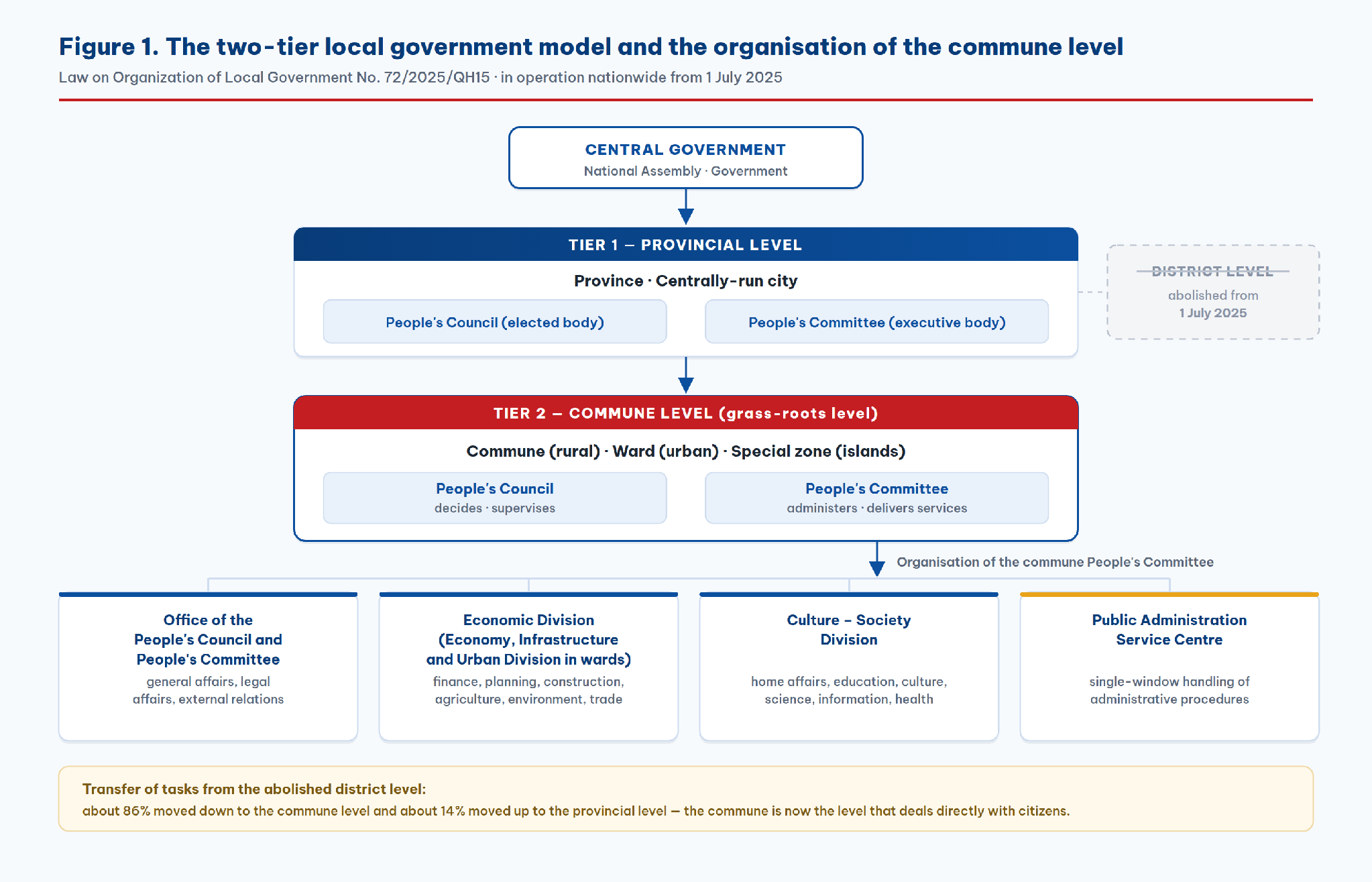
Figure 1. The two-tier model and the organisation of a commune-level administration
3. The commune People’s Council: deciding and supervising
Article 21 of the Law assigns the commune People’s Council the following main groups of duties and powers:
- Implementation of the Constitution and law: deciding measures to ensure implementation, adopting resolutions on matters within its competence, and annulling unlawful documents issued by the People’s Committee at the same level.
- Organisation and personnel: deciding the establishment or dissolution of specialised bodies; deciding the payroll of cadres and civil servants within the quota assigned by the provincial level; electing the Chairperson and Vice-Chairpersons of the People’s Committee.
- Planning and public finance: adopting the five-year and annual socio-economic development plans; deciding the State budget revenue estimate in the locality together with the local budget estimate and its allocation; deciding investment policy for programmes and projects.
- Sectoral matters: science, technology and digital transformation; land, natural resources and the environment; agriculture, forestry and fisheries; education, health, culture and social affairs; national defence, security, ethnic and religious affairs.
- Supervision: overseeing the work of the People’s Committee and of the other bodies of the commune, and performing any further tasks decentralised to it.
4. The commune People’s Committee: administering and delivering
Article 22 sets out the duties and powers of the commune People’s Committee:
- Preparing and submitting to the People’s Council the drafts of resolutions, plans and estimates that fall within the Council’s competence.
- Organising the implementation of the Constitution, laws and documents of superior State bodies, and of the resolutions of its own People’s Council.
- Exercising State administrative management in the locality across every field of social life.
- Adjusting the budget estimate within its competence and prescribing the specific duties of its specialised divisions.
- Managing the civil service payroll and deciding on detailed planning within the commune.
- Issuing its working regulation and its decisions, and performing the tasks decentralised or delegated to it by higher levels.
5. The Chairperson of the commune People’s Committee
Article 23 concentrates a substantial body of personal responsibility in the Chairperson, who is accountable both to the People’s Council and to the provincial level:
- Leading and running the work of the People’s Committee and of the local administrative apparatus.
- Directing the implementation of the Constitution, the law, the resolutions of the People’s Council and the directions of superior bodies.
- Directing the execution of the budget estimate and of socio-economic development tasks.
- Directing work on national defence and security, ethnic and religious policy, and the management of planning.
- Recruiting, employing and managing civil servants, and organising the provision of public services.
- Issuing decisions and, on behalf of the People’s Committee, deciding matters within its competence.
6. How a commune administration is organised
Decree No. 150/2025/NĐ-CP provides for three specialised divisions under the commune People’s Committee:
- Office of the People’s Council and the People’s Committee — general affairs, legal affairs and external relations.
- Economic Division — finance and planning, construction, industry and trade, agriculture and the environment. In wards and in Phú Quốc special zone this division is called the Economy, Infrastructure and Urban Division.
- Culture – Society Division — home affairs, education, culture, science, information and health.
Alongside the divisions, the Public Administration Service Centre receives applications and returns results for administrative procedures under the single-window mechanism. Each commune decides on the establishment of its divisions according to the management requirements of its own locality, so the structure is uniform in principle but flexible in practice.
7. Ten fields of devolved State management
Twenty-eight Government decrees on decentralisation, delegation and the delimitation of authority took effect on 1 July 2025. Together they place ten broad fields of State management in the hands of the commune People’s Committee: finance; agriculture and the environment; industry and trade; construction; home affairs; justice; education; science and technology; culture, sports and tourism; and ethnic and religious affairs.
In practical terms this means that a commune office now issues building permits, registers civil status, authenticates documents, manages markets and local electricity supply, administers pre-school education, handles policy for people with meritorious services, and decides on public investment projects within its competence — work that until 1 July 2025 belonged to the district.
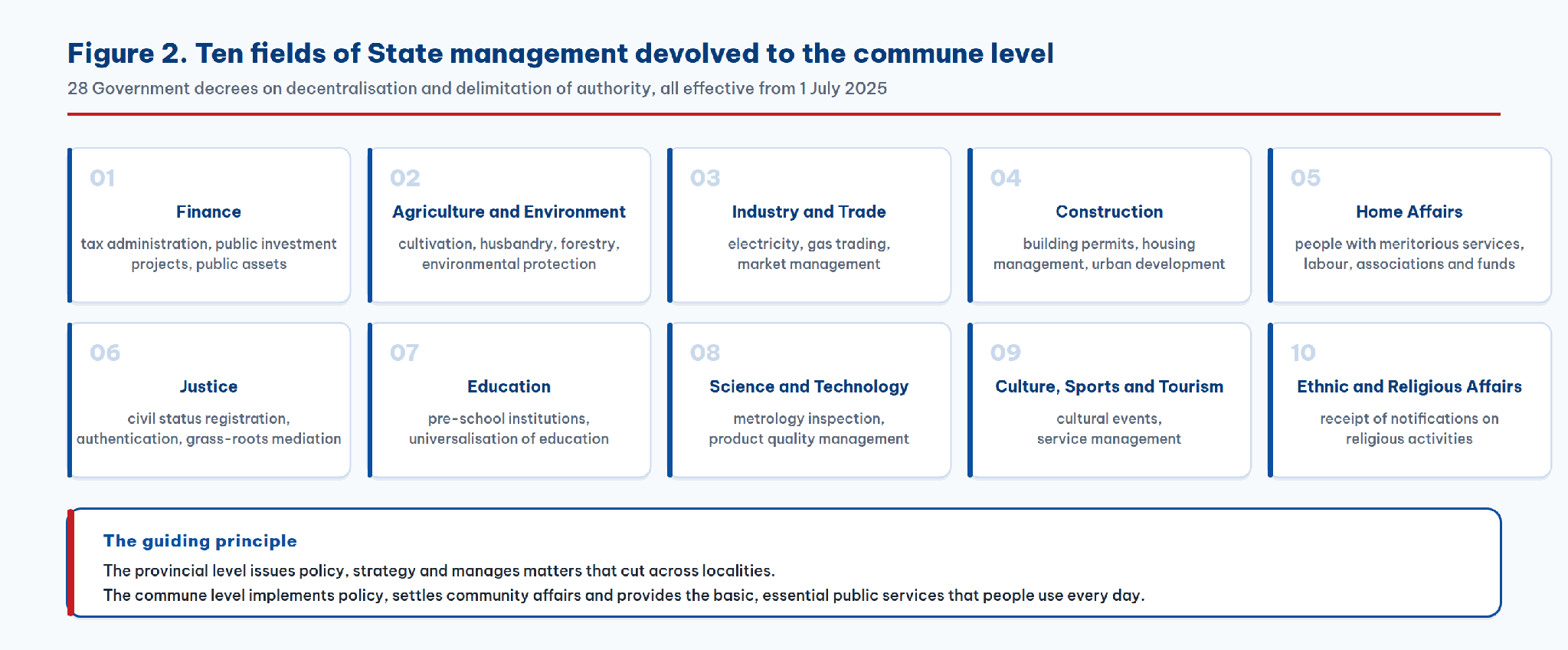
Figure 2. The ten fields of State management devolved to the commune level
8. What the reform means for citizens
- One place to go. Procedures that once required a trip to the district office are now settled at the commune Public Administration Service Centre, close to where people live.
- A shorter chain of decision. With one tier removed, a file passes through fewer hands and the official responsible for the outcome is easier to identify.
- A stronger commune. Larger units, more staff and wider powers allow the commune to plan and invest rather than merely relay instructions from above.
The guiding principle behind the whole design is simple: the provincial level issues policy, strategy and manages matters that cut across localities, while the commune level implements policy, settles community affairs and provides the basic, essential public services that people use every day.
Legal basis
- Law on Organization of Local Government No. 72/2025/QH15, passed by the 15th National Assembly on 16 June 2025; the two-tier model has operated nationwide since 1 July 2025.
- Decree No. 150/2025/NĐ-CP on the organisation of the specialised bodies of People’s Committees at provincial and commune level.
- Twenty-eight Government decrees of 2025 on decentralisation, delegation and the delimitation of authority, effective from 1 July 2025 — among them No. 125/2025/NĐ-CP (finance), No. 129/2025/NĐ-CP (home affairs), No. 131/2025/NĐ-CP (agriculture and the environment) and No. 140/2025/NĐ-CP (construction).
This article is provided for general information. Where it differs from the text of the legal documents cited above, the legal documents prevail.


